
Model sizing matched to actual need, reducing both the cost and the energy footprint of every answer.
Opening hours. Order status. Return policy. A large share of any conversation volume is routine.
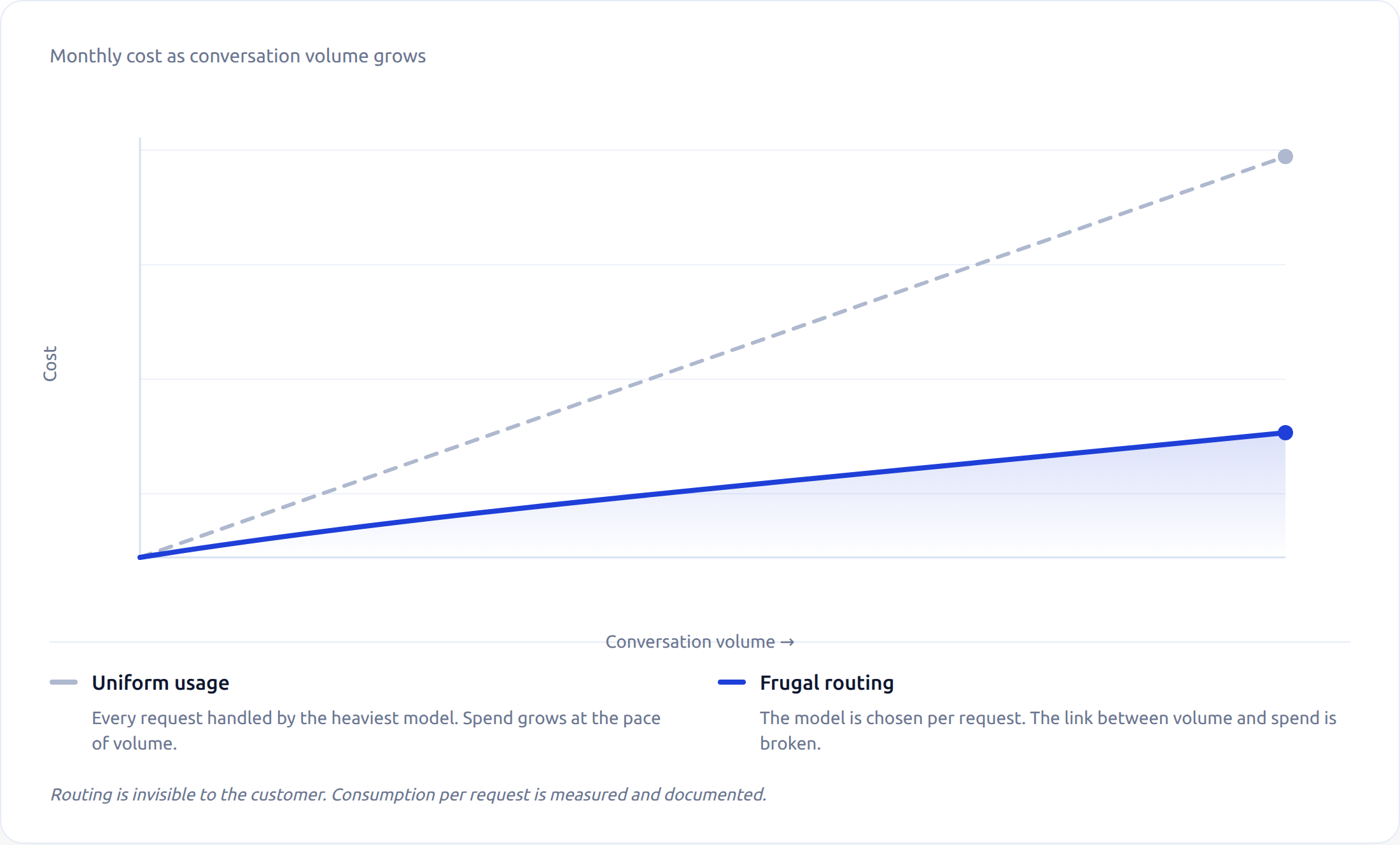
Answering it with the heaviest available model is waste — of cost, and of energy. Uniform model usage also means cost rises in step with volume.
Cleed.ai routes each request to the model that fits it, and keeps the heavier ones for what genuinely requires them.
Routing by actual need
Routine requests to lighter models.
Complex reasoning where it earns its cost.
Cost that scales sensibly
The link between volume and spend is broken.
Growth stops being a budget problem.
A measurable environmental argument
Reduced consumption per request, reported. Useful for CSR reporting and increasingly expected in public procurement.
Frugality is an engineering decision before it is an environmental one — and it happens to serve both. Routing is invisible to the customer, and answer quality is measured continuously.
Routing happens behind the scenes. The visitor experiences one Assistant, with one tone and one level of quality.
A request that needs a heavier model gets one. Quality thresholds are monitored, and routing adjusts.
Consumption per request is measured and available, so the environmental claim rests on data rather than intent.
Uniform model usage creates avoidable costs:
Routine questions answered by the heaviest model
Spend rising in step with traffic
Here is what changes with matched sizing: